Water Bottling Plant Planning Guide
A water bottling plant turns source water into packed bottles through treatment, rinsing, filling, capping, labeling and packing. Newpeak supplies these lines from its factory in Zhangjiagang, Jiangsu.
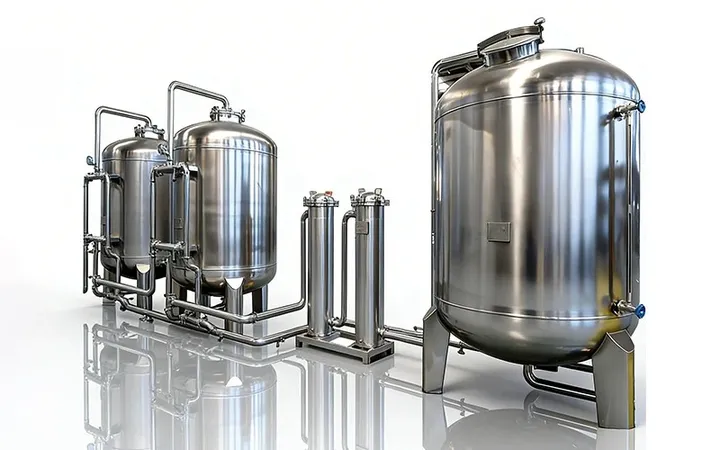
Water Bottling Plant Scope and Planning Inputs
A water bottling plant includes the scope from source water treatment through bottle rinsing, filling, capping, labeling and packaging. Planning starts with the water source, bottle format, output target, utilities and available layout. Newpeak is a beverage filling and packaging machinery manufacturer in Zhangjiagang, Jiangsu, China, and the sections below set out equipment, line layout, mineral water planning and small-line options.
In this context, a water bottle factory usually means a facility that fills bottled water, not a plant that makes plastic bottles. The main process areas are water treatment, bottle rinsing, filling, capping, labeling or coding, packing and palletizing. Bottle blowing can be included in the project if the factory needs to make its own PET bottles; otherwise bottles are purchased and fed to the line. Exact scope follows the product and site, and bottle blowing machines can be reviewed with the filling plan.
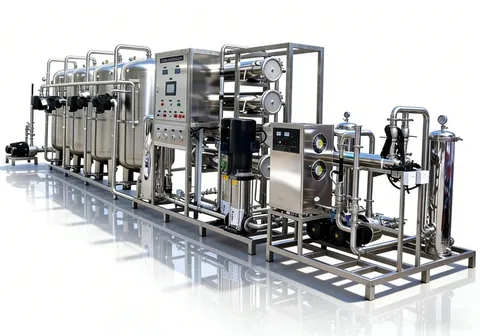
Water treatment and reverse osmosis equipment, view 2
Water Bottling Equipment, Water Bottling Line and Water Filling Line
Core water bottling equipment includes water treatment, a bottle rinsing-filling-capping monobloc, capping, labeling, coding, packing and conveyors. Selection depends on bottle size, output target, water type, automation level, utility availability and layout. Newpeak supplies water bottling machines and packaging solutions and can discuss configuration options for bottled water projects.
- Water treatment: filtration, softening, reverse osmosis or other steps matched to the source water report.
- Rinsing-filling-capping monobloc for the chosen bottle and cap format.
- Capping, labeling, coding, shrink wrapping or carton packing and conveyors.
- Utilities and controls: power, air, water, drains and line control.
- Optional bottle blowing, date coding and pallet handling depending on scope.
Individual machines handle separate steps and can be linked by conveyors; an integrated water bottling line combines pretreatment, filling and capping, packaging, utilities, controls and layout integration into a coordinated scope. The line scope depends on bottle size, output target and automation level. Newpeak can arrange a complete line or work around equipment already on site, with the final scope set by the product, utilities and building.
For a water filling line, match the line to bottle format, target output, water type, cap type, automation level and available floor space. Common configurations use a rinsing-filling-capping monobloc followed by labeling, coding and packing. Newpeak can discuss configuration options; the final selection follows the bottle and cap drawings, water analysis and site layout.
Bottled Water Production Line and Mineral Water Production Line Layout
A bottled water production line typically runs from water treatment to bottle handling or blowing, rinsing, filling, capping, labeling or coding, packing and palletizing. The sequence looks simple, but line configuration varies with bottle format, output target, automation level and site layout. A compact line may combine rinsing, filling and capping in a monobloc; a larger line separates packing and palletizing into dedicated areas.
A mineral water production line differs from a purified water line mainly in how treatment is planned around the source. Mineral water may use treatment that preserves desired minerals, while purified water focuses on removing dissolved solids. Both need hygienic filling, correct capping and bottle rinsing, but the water analysis drives the treatment train. Newpeak reviews water treatment systems against a complete raw water analysis including pH, turbidity, TDS, hardness, iron, manganese, COD, residual chlorine and total bacterial count.
Layout planning places treatment, filling, packaging and utility areas in a logical flow, with access for bottle supply, cap supply, packed goods and cleaning. Bottle format and output target set conveyor widths and buffer sizes; automation level sets operator positions and control points. Newpeak prepares layout drawings around the selected machines and the available building, and beverage filling lines can be reviewed when the project expands beyond water.
Mineral Water Bottling Plant Planning
Planning a mineral water bottling plant starts with source protection and a clear picture of the mineral content. The treatment steps must be chosen to meet the intended product and local rules, not copied from a purified water line. Hygienic filling, bottle rinsing, capping, labeling and packaging follow the same discipline as other bottled water lines, but the source and treatment train set the operating limits.
Mineral content can change with season and draw point, so the plant layout should allow sampling, storage and treatment checks before filling. Bottle and cap formats, output target, automation level and building constraints shape the line. Newpeak is a filling machinery manufacturer and supplies equipment for water filling and packaging; project approvals and market rules remain with the plant operator.
Newpeak’s team includes 10 R&D engineers and 3 QA/QC inspectors, and the company became a formal member of the China Beverage Machinery Association in 2020. This supports the filling side of mineral water planning, while source protection and treatment choices remain specific to the site.
Small Bottled Water Production Line Options
A small bottled water production line can use a compact scope: water treatment, rinsing-filling-capping, labeling, packing and the shared utilities that support them. The line can start with manual or semi-automatic packing and add conveyors or automatic packing as volumes grow. The building layout often sets the real limit, so tank position, bottle storage and packed-goods space need to be fixed early.
Scalability matters more than buying every option at the start. Treatment capacity, filling block, conveyor runs and utility headers can be sized for a later step-up, while packing and palletizing can stay manual until the product mix justifies automation. Shared utility needs include power, compressed air, process water, drains and cleaning water. Newpeak’s manufacturing plant covers 4,259 m² and standard filling machines are usually delivered within 25–35 days; customised turnkey lines take 45–60 days depending on configuration.
For a small line, keep the layout tight but leave access for bottle and cap supply, maintenance and cleaning. A combined rinsing-filling-capping frame with labeling and packing close by reduces floor space, while separate packing gives room for cartons and staff. Newpeak can discuss compact configurations around the selected bottle format and site; exact output follows the chosen machines rather than a general estimate.
Request a quotation
Share your product, plant space and output goal.
Or write to sales@bottlefillingsystems.com